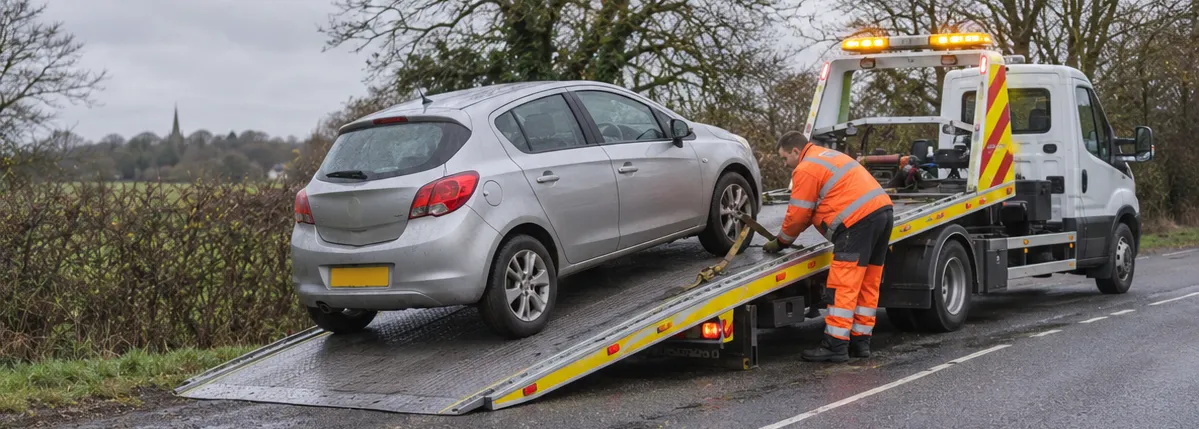
Breakdown advice
What to Do When Your Car Breaks Down in the UK
A practical UK-wide breakdown checklist: getting somewhere safe, motorway rules, who to contact and what to tell a recovery operator.
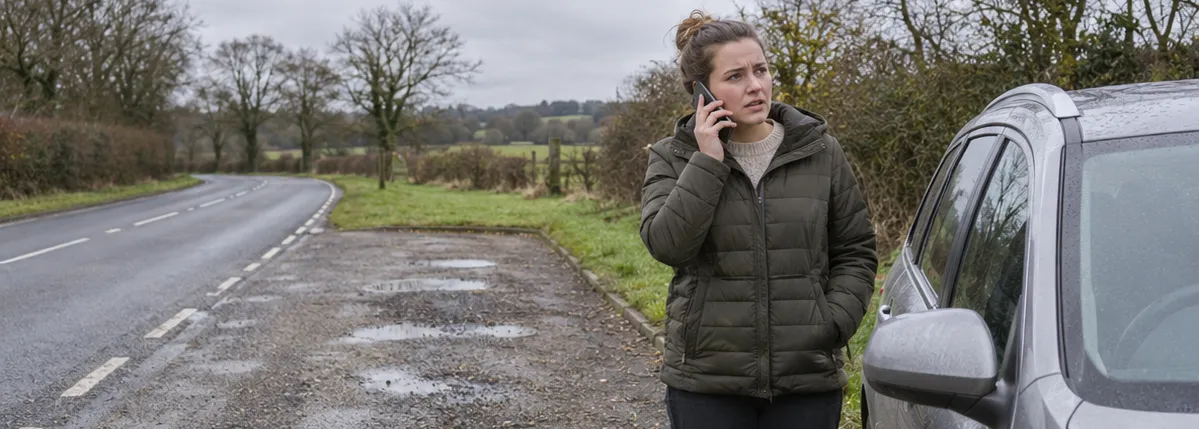
A car breakdown can happen on your driveway, a quiet road or a fast-moving motorway. The right first step depends on where you have stopped. Personal safety comes before getting the vehicle moving.
Use this UK guide to work out what to do immediately, what information to have ready and how recovery works if the car cannot be fixed or driven safely.
1. Get somewhere safe before making calls
If the vehicle is still moving and it is safe to continue, aim for a nearby car park, lay-by, service area or other place away from traffic. Avoid stopping on a blind bend or narrow stretch if you can reach a safer location. Turn on the hazard lights once you have stopped.
On an ordinary road, think about passing traffic before opening a door. Wear a high-visibility jacket if available, and move somewhere safe if you can do so without putting yourself or passengers at risk.
- If you smell fuel, see smoke or suspect fire, keep away from the vehicle and call emergency services.
- Do not stand behind or immediately alongside a vehicle where passing traffic could hit it.
- Do not attempt a roadside repair in an exposed, unsafe position.
2. What to do on a motorway or high-speed road
If possible, leave the motorway at the next exit or pull into a service area or marked emergency area. Where a hard shoulder exists, it can be used in an emergency. Put your hazard lights on and follow the current Highway Code and road signs.
If you are stopped in a place of relative safety, and it is safe to leave, exit via the side away from traffic and move behind a safety barrier where one exists. Keep well away from the carriageway and never walk across a motorway. Use an emergency roadside telephone if available or contact National Highways as directed.
If you cannot reach safety, have broken down in a live lane or cannot safely get out, keep your seat belt on if remaining in the vehicle is safest, switch on hazards and call 999. Explain your precise location and situation to the emergency operator.
Important
Never place a warning triangle on a motorway. If you are in an emergency area, contact National Highways before rejoining the carriageway. These are safety instructions, not steps a recovery company should override.
3. On a residential road or in a car park
If the car has broken down at home, you normally have time to gather the details before arranging a recovery. In a public car park, check whether the truck can enter, especially if there is a height barrier or steep ramp. Tell the operator if access is narrow or the vehicle is in an underground bay.
If the car is in a private car park or a garage forecourt, ask the site or garage whether collection is permitted and how the driver should get access.
- Find the full pickup postcode and, if possible, a street address or a clear nearby landmark.
- Confirm where the car needs to go: home, a workshop, tyre centre or another agreed destination.
- Say whether the vehicle rolls, steers and has its keys available.
4. Should you call breakdown cover or book a recovery?
If you already pay for breakdown cover, check the policy first. A roadside technician may be able to get you moving, but some policies limit towing distance or the destination. Ask about any excess or extra mileage before agreeing.
If you have no cover, the vehicle is beyond roadside repair, or you need it moved to a chosen garage, a pay-as-you-go recovery can be arranged. Tell the recovery service the true condition of the car so that it sends a suitable truck.
5. What to say when requesting a recovery quote
A useful recovery call is short and specific. Start with where the vehicle is and where you need it taken. Then describe the reason it cannot be driven, whether it rolls and steers, and any obstacles to collecting it.
Ask for the full customer price and estimated arrival time before booking. The time to ask about deposits, the remaining balance, waiting charges and the destination is before the truck is sent.
- Pickup postcode, exact location and contact number
- Destination postcode or address
- Vehicle make, model and approximate size
- Running or non-running; can it roll and steer?
- Keys, damage, locked wheels, underground parking or motorway location
6. What happens after you book?
Once the collection details and price are confirmed, an available suitable operator is allocated. The operator travels to the vehicle, checks the loading conditions, secures it and takes it to the destination agreed with you.
SendATow can check availability and arrange recoveries through its operator network. Our current operational focus is Portsmouth and surrounding Hampshire; for another UK location, call to check coverage rather than assuming we have a truck immediately available.
Need a recovery quote?
Call with the pickup, destination and vehicle condition. We'll check suitable collector availability and confirm the customer price before arranging a recovery. Our current operational focus is Portsmouth and surrounding Hampshire.
Common questions
Should I call 999 if my car breaks down?
Call 999 if you are stranded in a live motorway lane, cannot reach a place of safety or there is immediate danger. For a breakdown in a safe location, contact your breakdown provider or a recovery service.
Can I put a warning triangle behind my car?
Never put a warning triangle on a motorway. On other roads, follow Highway Code guidance and only use one when it is safe to do so.
What if the car is not safe to drive?
Do not continue driving a vehicle that cannot be controlled safely. Tell the recovery operator what happened and arrange suitable transport.
Useful SendATow pages
Sources and further reading
References for public safety, legal information and third-party market guidance. Article last reviewed .